Chapter One
The Cold Return
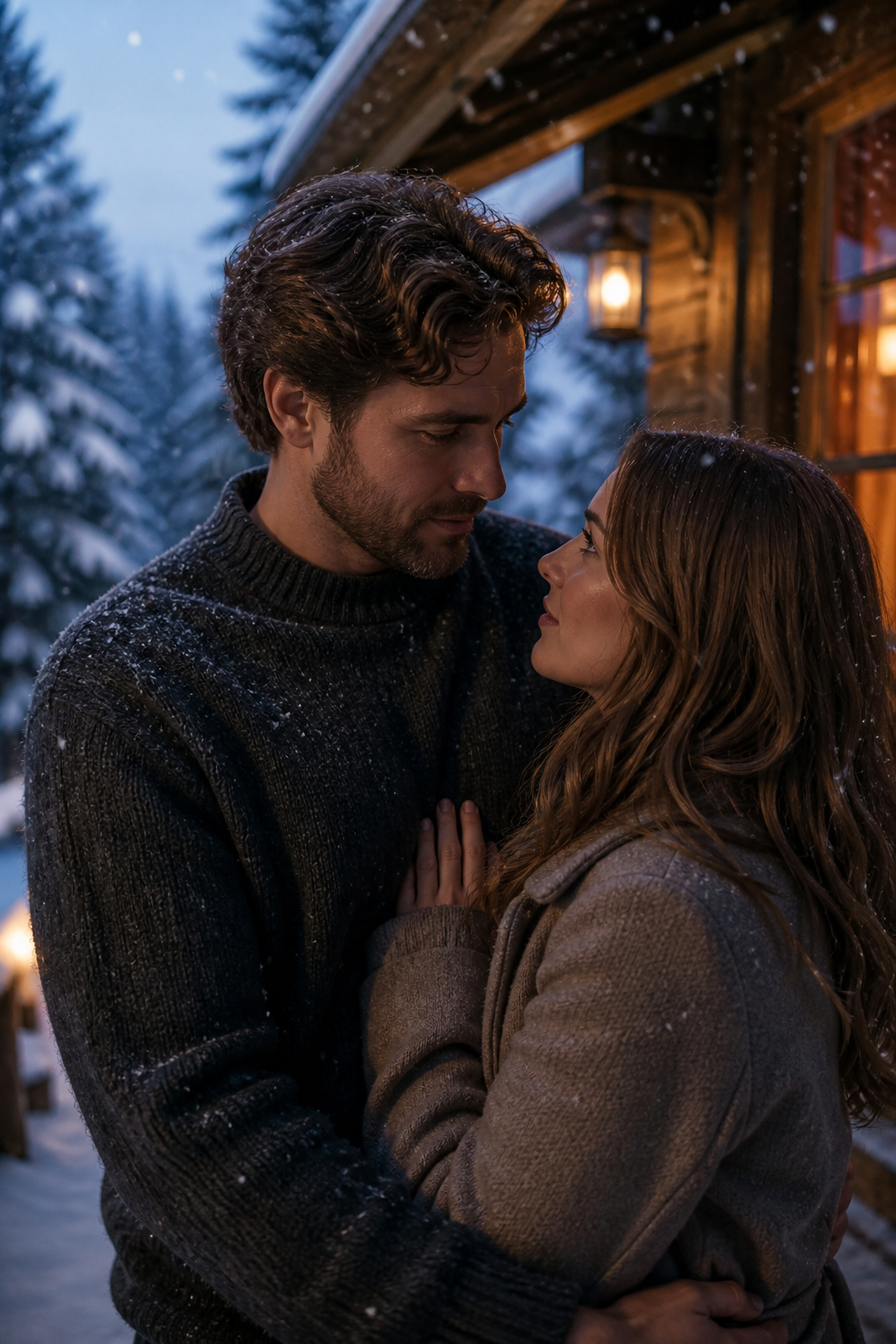
The Cold Return
The brass key resisted at first, stubborn with rust, before turning with a heavy, metallic scrape that echoed too loudly in the mountain silence. I pushed. The thick oak door groaned on its hinges, and a draft of stale, frozen air rushed out to greet me, smelling of dry pine, disintegrating paper, and the distinct, chilly scent of long-term abandonment.
I stepped inside, my boots clicking sharply against the dusty hardwood floor.
This cabin had once been a sanctuary, a place of golden light and endless summer afternoons. Now, it was just a physical vault of everything I had lost and everything I was trying to run away from. I dropped my canvas duffel bag by the door. The heavy thud sent a small plume of gray dust swirling into the pale winter light.
"Just a week," I whispered to the empty hallway, my voice sounding thin, fragile, and entirely too small. "Pack the papers, sign the listing agreement, and leave."
My father had been a man of letters, a prominent historian who believed that nothing of true value could ever be stored on a digital drive. When he passed away three months ago, he left behind a lifetime of research, draft manuscripts, and historical correspondence, all housed in the floor-to-ceiling bookshelves of this remote mountain retreat. It was my job, as his only daughter and a former academic myself, to sift through the wreckage of his intellect. I had to catalog the valuable papers for the university archives and prepare the cabin for sale.
I walked into the living room, where the furniture was draped in faded white sheets, making the space look like a collection of sleeping ghosts. I pulled the dust cover off the high-backed armchair by the stone fireplace, coughing as a cloud of gray particles billowed upward into the cold air.
The silence here was absolute, heavy with the weight of the surrounding pine forest and the towering peaks of the Rockies. It was the kind of silence that forced you to listen to your own thoughts—and right now, mine were a chaotic mess of grief, exhaustion, and a lingering, dull ache I had spent years trying to bury.
I crossed the room to the large bay window that looked out over the valley. The glass was clouded with grime and frost, mapping out delicate, icy fractures. Deciding that some fresh air might dispel the oppressive mustiness, I unlocked the wooden sash and shoved upward.
It didn't budge.
I frowned, placing both hands flat against the frame and pushing with all my weight. The old wood groaned, but remained stubbornly shut, sealed tight by years of moisture and neglect. I let out a frustrated sigh, wiping a streak of sweat from my forehead with the back of my sleeve, my heart thumping slightly from the exertion.
As I paused to catch my breath, I looked through the glass. The view was breathtaking, but today, it felt ominous. The peaks across the valley, usually sharp and clear against the blue Colorado sky, were completely gone. A massive wall of bruised, purple-gray clouds was rolling over the ridge, moving with terrifying speed.
I pulled out my phone to check the weather, but the screen displayed a frustrating No Service icon. When I had checked the forecast in the valley town forty-five minutes ago, it had predicted nothing more than a light flurry. But looking at the sky now, the thick, heavy darkness swallowing the mountainside signaled something much worse. An unforecasted blizzard was rolling in, and it was heading straight for me.
My heart did a nervous flutter, but I forced myself to take a deep breath. I was independent. I had survived graduate school, a grueling academic career, a devastating breakup, and the loss of my father. I could handle a little snow. The cabin had a wood-stove, plenty of dry firewood in the shed, and enough canned goods in the pantry to last a month. I didn't need to panic, and I certainly didn't need to go running back down the treacherous mountain road in the dark.
Determined to ignore the encroaching storm, I turned my attention to the bookshelves.
I approached the towering mahogany shelves that lined the western wall. This was my father’s life. Thousands of leather-bound volumes, historical texts, and binders full of handwritten notes. I reached out, my fingers tracing the spines of the books, feeling the textured buckram and smooth calfskin until I reached the section on classic literature.
My hand stopped.
Nestled between a dense volume on the Roman Empire and a thick biography of Thomas Jefferson was a small, unassuming paperback. The spine was creased, the edges frayed and yellowed. I pulled it from the shelf, my chest tightening before I even read the title.
It was a collection of Keats’s poetry.
My fingers trembled slightly as I opened the cover. On the inside flyleaf, written in a precise, elegant, and painfully familiar script, was a name: Noah. Below it, a date from seven years ago, and a small, hand-drawn sketch of a pine branch.
A wave of unresolved grief, sharper and more suffocating than the loss of my father, crashed over me.
Noah.
He had been a young assistant professor when I was finishing my master's degree. Tall, with an average, unassuming build that he hid beneath soft corduroy jackets, and a gentle, patient demeanor that had immediately drawn me to him. He was bookish in the most endearing way, always smelling faintly of paper and black coffee, his eyes lighting up whenever he spoke of romantic poetry.
We had spent one magical summer here at this cabin, helping my father organize his early research. Noah and I had spent our evenings on the porch, wrapped in a single wool blanket, reading Keats to each other by the amber light of a hurricane lamp. He had loved me with a quiet, devastating intensity—and I had loved him just as fiercely.
But when my father’s health began to decline, and my own academic career crumbled under the weight of burnout and pressure, I had pushed Noah away. I had convinced myself that I needed to handle my life alone, that his gentle, patient love was a luxury I couldn't afford while my world was falling apart. He had been quietly devastated by our breakup, his blue eyes filled with a silent, aching hurt that had haunted my dreams for years. He had stayed in the area, taking a permanent position at the local college, while I had fled to the city.
I turned the pages of the poetry book, my throat tight. Noah’s annotations filled the margins in faded pencil. Next to Ode on a Grecian Urn, he had written in his neat hand: “Bold Lover, never, never canst thou kiss, Though winning near the goal yet, do not grieve; She cannot fade, though thou hast not thy bliss, For ever wilt thou love, and she be fair!”
Beneath the printed text, Noah had added a small note: For Claire. Even when the winter comes, the warmth of this place remains.
A single tear slipped down my cheek, landing on the yellowed page with a soft tap. I quickly wiped it away with my thumb, closing the book with a quiet snap. Why had he left this here? Had he forgotten it, or had he left it as a quiet testament to what we had lost? The pain of his absence felt fresh, a raw wound that the cold mountain air only served to irritate.
I leaned my forehead against the cool wood of the bookshelf, clutching the book to my chest. I felt utterly isolated, marooned in a sea of past memories and present grief. The urge to pack up my things, get back in my car, and drive away was overwhelming. But my fierce independence, the stubborn pride that had always been both my strength and my ruin, kept me anchored. I wouldn't run. I had a job to do.
A sudden, violent gust of wind rattled the cabin, shaking the glass in the bay window and making the old wooden beams groan.
I looked up. The light in the room had changed. The bruised clouds had completely swallowed the sun, plunging the mountainside into a premature, eerie twilight. Outside, the first thick flakes of snow were swirling past the window, driven by a howling wind that sounded like a living, breathing entity.
The storm was here.
I set Noah’s book down on the coffee table and walked back to the window. The trees at the edge of the clearing were bending under the force of the wind, their branches heavy with rapidly accumulating snow. The road I had driven up just an hour ago was already disappearing beneath a thick, white blanket.
I was trapped.
"It's fine," I muttered, trying to convince myself. "You have wood. You have food. You're safe."
I walked toward the kitchen to find a flashlight, my footsteps quickening as the wind outside rose to a high-pitched shriek. The temperature inside the cabin was dropping fast, my breath beginning to puff in faint, white clouds before me. I reached for the light switch on the kitchen wall, intending to turn on the overhead light to dispel the creeping shadows.
Before my fingers could touch the plastic toggle, there was a loud, sharp pop from the utility pole outside.
Instantly, the hum of the refrigerator died. The digital clock on the microwave went black. The dim, gray light filtering through the windows was the only thing left, casting long, distorted shadows across the dusty floorboards.
The power was out.
I froze, my heart hammering against my ribs. The cold seemed to double in intensity, wrapping around my ankles like an icy hand. I stood in the center of the dark kitchen, clutching my arms around my chest, listening to the ferocious roar of the blizzard battering the cabin walls. I was entirely alone, miles from the nearest town, with no electricity, no heat, and no way to call for help.
Then, through the deafening howl of the wind, came a sound that made my breath catch in my throat.
Thud. Thud. Thud.
A heavy, deliberate knock rattled the front door.